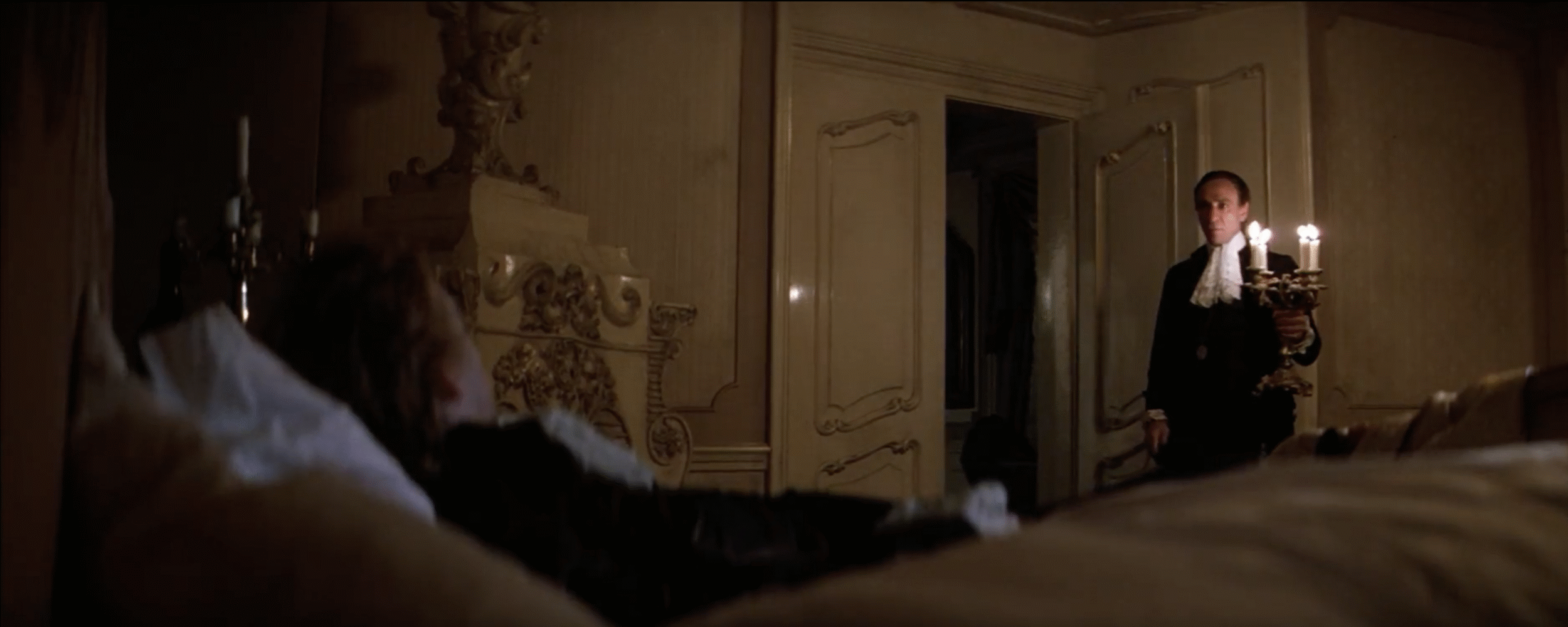
This week seen the rerelease of Amadeus (Forman, 1984) for its 40th anniversary to Irish audiences. In my review I made for it, the aspect that I touched upon most was the role of Antonio Salieri in the film illustrating how the narrator of the story can dictate what is being shown. This article goes more into depth about this, using examples from other musical films to show how a narrator can play such an important part in this genre of filmmaking. My examples touch upon musical artists ranging from the 1930s til the 1990s, but truth and deception are what I am going to touch upon in relation to them all.
The first film I’m highlighting here is 24 Hour Party People (Winterbottom, 2002). It follows in the same way with a narrator close to the story narrating over the unfolding of events. Tony Wilson, played by Steve Coogan, is here the narrator in question who guides us through the story of Factory Records, the record label in which he was manager of. From the outset blurs the line between biographical story and narrative where Wilson is made to be the narrator and already has a biased view on events. This use of an unreliable narrator means that what you are seeing comes from this individuals perspective. They may have been at the heart of the story, but when you are this close to events then your beliefs and memories are going to be impacted through emotion and attachment that remove any sense of neutrality upon the events.
Wilson’s performance is often laced with irony, he is throughout talking to the audience directly and breaking the fourth wall of narrative cinema. It acknowledges the constructed nature of the film and once again breaks any sense of reality of what is being told. This can be related to another film about a influential musical scene around the same time which is that of The Great Rock ‘n’ Roll Swindle (Temple, 1980) that told a rather skewed perspective of the Sex Pistols manager Malcolm Mclaren – the band in which Tony Wilson also sees for the first time in 1976 and is the subject to a scene in 24 Hour Party People. Where they crossover is that both include a narrator in which the philosophy of their beliefs impacts the images being shown on the screen, and to that extent the validity of it. In this case, it is more encompassing of the characteristics and tropes included in the punk movement, making it into a film about the most revolutionary punk band of the time. Compared to 24 Hour Party People which encapsures the post-modern and ironic nature of the post-punk music at the time.
To be a successful punk artist, it isn’t about if anyone likes or admires you, or even if you are seen as having any mainstream musical talent. It is about making a statement through its activism or even anarchic nature, the end goal is to create change and break the status quo. Malcom Mclaren’s overview throughout this film provides a prime example of this. What your seeing is in no ways a story of truth, it is there to shock and get an emotional reaction out of its audience. Mclaren appears as someone in the film who manipulates the band and situation for his own gain, but at the same time is the one commenting on the events of the film throughout. It is clear that someone wouldn’t agree to do this unless they were happy with the way they were presented in the film. Mclaren had no objection to this because it both created publicity for his own image and also increased the mythology behind the truth of what really went on with the sex pistols.
They are still talked about and lauded as pioneers in the musical industries because beyond their music, they have a captivating story to give to the public. This isn’t something they create, their image and story is something that has been moulded, if not manipulated, on their behalf by others. Through the powerful imagery in the film, these are ones that stick with fans and the public altogether even if they might play fast and loose with the truth. It appeals to the binary nature in which people hold their beliefs (Mclaren vs the band) and creates a story in a situation where no other point of view is being shown (no other films or documentaries on the band). Amadeus may not be the truth, but a lot of people hold their views and facts about Mozart and Salieri from the film which can be attributed to its success with audiences and also the way in which it creates a captivating story.
The next film in relation to this topic is that of Sweet and Lowdown (Allen, 1999). Its a deviation from the previously mentioned films here as the central figure in the film isn’t a real musician from the 1930s in which the film sets itself. What makes it interesting is in fact that even in this fictional setting, it gives the audience a sense of reality through the ‘talking heads’ that are included within it. Musical critics and DJs appear throughout the film giving validity and comment to the pictures shown on screen to the life of Emmet Ray (Sean Penn), the 30s musician and protagonist, where even the director Woody Allen appears to talk about the life of the musician.
Talking heads are something that is all too common in tv documentaries in the current day. If you are being positive about them you would say that they are trusted sources of information about the story being told in a documentary, say for example your watching a documentary on mould on BBC Four. If you are more cynical then they could it could be sold as Z-list celebrities commenting on pointless topics used to pad out an empty documentary, say for example the whole tv listing of Channel 5. Regardless, they are used for the audience to trust the story being told and in this film they create reality in a world of fiction.
Relating this back to Amadeus, the latter is one that has a biased and untrustworthy narrator, whereas in this case and through ‘real names’ it bring the story into the world of real life. Jealousy from Salieri creates deceitfulness whereas the neutrality from the talking heads gives a level headedness in its approach. Most interesting of all, it manages to use the guiding voice as a cinematic tool to illustrate the downfall in the final third of the main protagonists. Salieri’s rising emotions throughout taints the truthfulness of what is being shown as a real story. This is compared to this film where the talking head of Woody Allen appears more later in the film. We can trust it early on because the talking heads are those of music specialists whereas now it is a director whose main job is to create an exciting narrative, even if the truth might get in the way. As expected, this is where the main protagonist starts to lose the plot and like most music biographies there success and talent soon leads to downfall. Which begs the question, who wants a true story when a made up one can be so more exciting?
Wow, competitive slots sound intense! I never thought of casino games as a ‘battleground,’ but 333jili login com makes it seem that way. Fun to see platforms adding that extra layer of skill & strategy! 🤔
Fascinating analysis of unreliable narrators in music films! The emotional bias affecting storytelling reminds me of curated experiences in entertainment platforms—just as 777ph slot download offers personalized gaming journeys. Truth perception varies by perspective’s proximity.
Fascinating analysis of unreliable narrators! The way personal bias shapes storytelling mirrors how we curate entertainment experiences. Just as a narrator frames perception, gaming platforms like j77 casino slot craft immersive journeys through careful design. Your comparison between Salieri and Wilson brilliantly exposes truth’s subjectivity in narrative art.
Baccarat strategy is fascinating – it’s not just about luck, but understanding patterns! Seeing platforms like ph25 apk invest in tech & security (like their verification process) is a good sign for serious players. Interesting evolution in the SEA market!
The exploration of unreliable narrators beautifully illustrates how perspective shapes our understanding of truth. In the gaming industry, establishing genuine trust matters immensely. Platforms need to demonstrate authenticity, much like how oklaro legit operations prove their credibility through certified systems and transparent practices.
Responsible gaming is key, especially with easily accessible platforms. Seeing features like KYC verification on sites like funbingo apk builds trust. Remember to set limits & play within your means! It’s about fun, not chasing losses.
This exploration of unreliable narrators in musical biopics brilliantly exposes how perspective shapes truth. Just as biased storytellers filter events through their lens, modern AI systems like picoclaw demonstrate how context framing influences information processing. Your analysis of Wilson’s ironic performance perfectly captures that delicate balance between authenticity and narrative necessity.
Fascinating analysis of how unreliable narrators shape our perception of music history. The parallel between Salieri’s biased storytelling and how we interpret artistic narratives today is striking. Just as platforms like gg panalo legit build trust through transparency, documentaries must acknowledge their own perspectives to truly resonate.
I’m impressed by Big Buck Bunny’s PAGCOR compliance and data privacy measures; trust is key in gambling. Read more about their licensing here: Big Buck Bunny apk for secure play.